

Cognitive Behavioral Therapy.
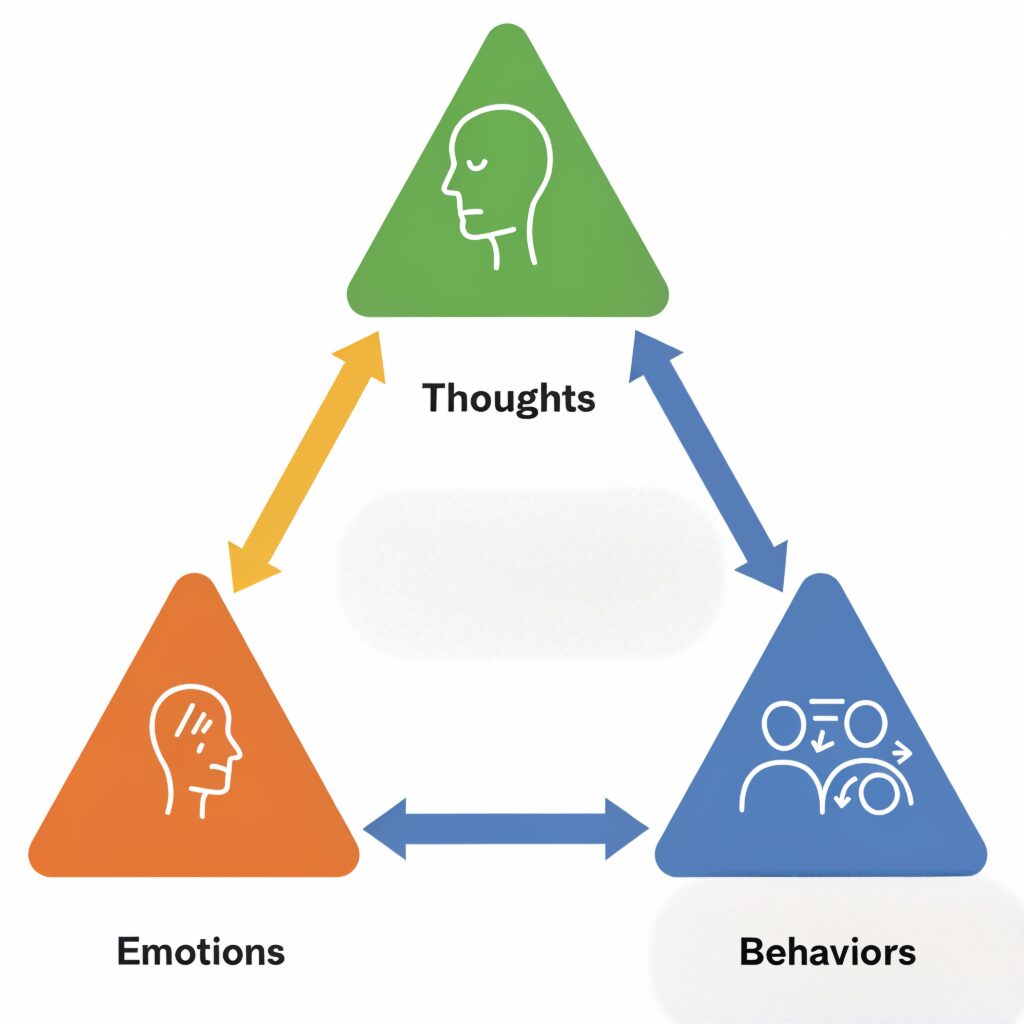
The overall goal in cognitive behavioral therapy [CBT] is to modify one’s thoughts, beliefs, and perceptions, and to change one’s usual pattern of behaving. Modifying the way in which you think can facilitate both emotional and behavioral change. Similarly, altering the way you act can result in cognitive and emotional change. Essentially, I want you to feel more in control of your own life.
Fundamental characteristics of cognitive behavioral therapy:
- Empirically-based. Research has shown that cognitive behavioral therapy can be highly effective in the treatment of many clinical problems including depression and anxiety disorders.
- Goal-oriented. We will work together to establish goals for treatment and use these goals to monitor progress to assess whether desired changes have been made.
- Problem-focused. Treatment is tailored to address concrete problems and reduce specific symptoms. These vary for each person and may also change during the course of therapy.
- Collaborative. I will work with you to identify and understand your problems and to make changes in your life.
- Active. I will educate you about your problems and help you to understand potential underlying causes and solutions to them. I will ask you to work in between sessions, thinking about and practicing the techniques and strategies you learned in session. You are an agent, not an object of change.
- Homework. Given the active nature of cognitive behavioral therapy, homework is often assigned to facilitate and expedite the therapeutic process because it helps you to think about your reactions and make changes between our sessions.
Note: specific techniques and interventions may differ depending upon your symptoms and goals.
General Information about My Approach. Although I use cognitive behavioral therapy techniques to help people make meaningful changes in their lives, I always try to work in a flexible and thoughtful way that fits each person’s individual needs.
Sometimes people think cognitive behavioral therapy only focuses on the present and doesn’t explore the past. In my experience, that’s not always the case. Depending on your situation, it can be really helpful to look at past experiences and relationships to better understand how they may still be affecting your life today.
If it seems helpful for your treatment, we can also talk about the option of adding medication. If that’s something you’d like to explore, I can provide referrals to trusted and experienced psychopharmacologists and work collaboratively with the professional you choose. Learn more about medications for psychiatric challenges at the National Institute of Mental Health.